The daily edition · June 19, 2026

Denisovan DNA still runs our immune systems, and the brain learns in two steps

Your morning brief

an 18-minute read

The feel-good story of the day

Blaise Pascal Wikimedia Commons / Blaise Pascal
Pictured Blaise Pascal

The nineteen-year-old who built the world's first calculator to help his father

Blaise Pascal was born on June 19, 1623, in Clermont-Ferrand, France. His father, Étienne, was a tax commissioner, and in the 1640s that meant sitting with mountains of figures, adding and multiplying by hand for hours on end. The work was accurate but brutal.

At nineteen, Pascal decided to help. He designed and built a mechanical calculator that could add and subtract five-digit numbers automatically, just by turning a series of interlocking wheels. He called it the Pascaline. Building one that actually worked turned out to be extraordinarily hard: the tolerances required for the gears were beyond what most craftsmen could manage. Pascal built more than fifty prototypes before producing a machine he trusted. He eventually made about twenty.

The Pascaline did not replace his father. It was a tool his father's mind directed. That distinction mattered to Pascal philosophically, and it still does. He went on to lay foundations for probability theory, atmospheric physics, and the mathematical structure we call Pascal's triangle. He wrote some of the most compelling prose in the French language. He died at 39. The machine he built for his father is widely recognized as the direct ancestor of every computer that followed it, and the whole argument about what machines can and cannot do begins, in a real sense, with a teenager who just wanted to spare his dad some arithmetic.

The common thread · How today's discoveries connect Open editor's note
Fresh today · June 19, 2026

The discoveries, in full

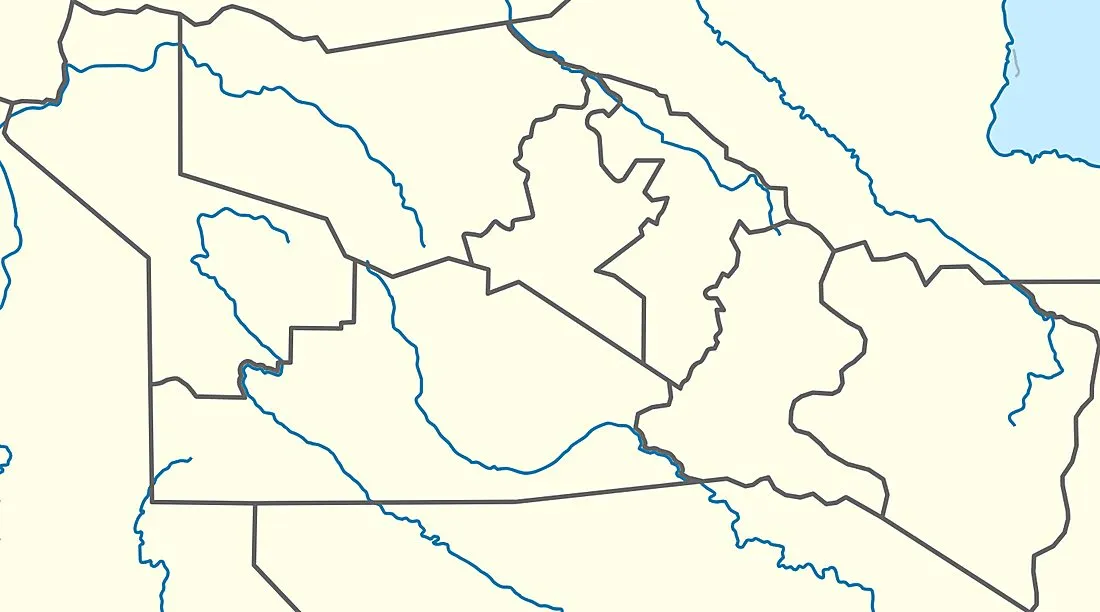
Papua New Guinea highlands
Pictured Papua New Guinea highlands · NordNordWest (via Openverse)
01/07 Natural Sci. Human Stories

Denisovan genes are still active in our immune cells

A Yale-led team sequenced the genomes of 177 people from 12 populations across Oceania, then compared those sequences against the known Denisovan genome and three Neanderthal genomes 12.

What they built was a catalog three times larger than any previously assembled: 3,127 Denisovan genetic variants that are still actively functioning in living people from Papua New Guinea, the Solomon Islands, and Fiji 12. People from Papua New Guinea carry up to 5% Denisovan DNA, an extraordinary proportion given that the Denisovans vanished around 30,000 years ago. That DNA is not sitting inert as an evolutionary footnote. It is switching immune genes on and off, regulating the body's response to pathogens, in people alive today 12.

What each field noticed (2)
Live Science

Denisovan DNA influences the immune systems of modern Oceanians — but researchers aren't sure why

Yale's Patrick Reilly and Serena Tucci built the largest Denisovan genome catalog ever assembled and found 3,127 variants still doing things inside Oceanian immune systems 12. Some of those variants regulate the genes that turn the immune response on or off. One clue about why: Tibetans carry a Denisovan version of the EPAS1 gene that helps them breathe at altitude, a clear case of ancient DNA preserved because it gave real advantage in a particular environment 12. The Oceanian immune variants look similar in principle. Selection kept them because they helped. What exact threat they helped defend against, whether specific pathogens, particular parasites, or something else, is still unknown 12.

Read the story
Aeon

Neanderthal 1

A short film from BBC Global visited the Neander Valley in Germany, where quarry workers in 1856 stumbled on 16 bones that changed everything 229. The Neanderthal Museum now marks the spot. What the film documents is how much has been recovered since then: the health problems, the behaviors, the intimate details of a real person's life, decoded from ancient remains 229. Set next to the Denisovan finding, the picture becomes striking. Both stories are about people who were not abstractions. They were biological beings whose choices and bodies left permanent traces in ours.

Read the story
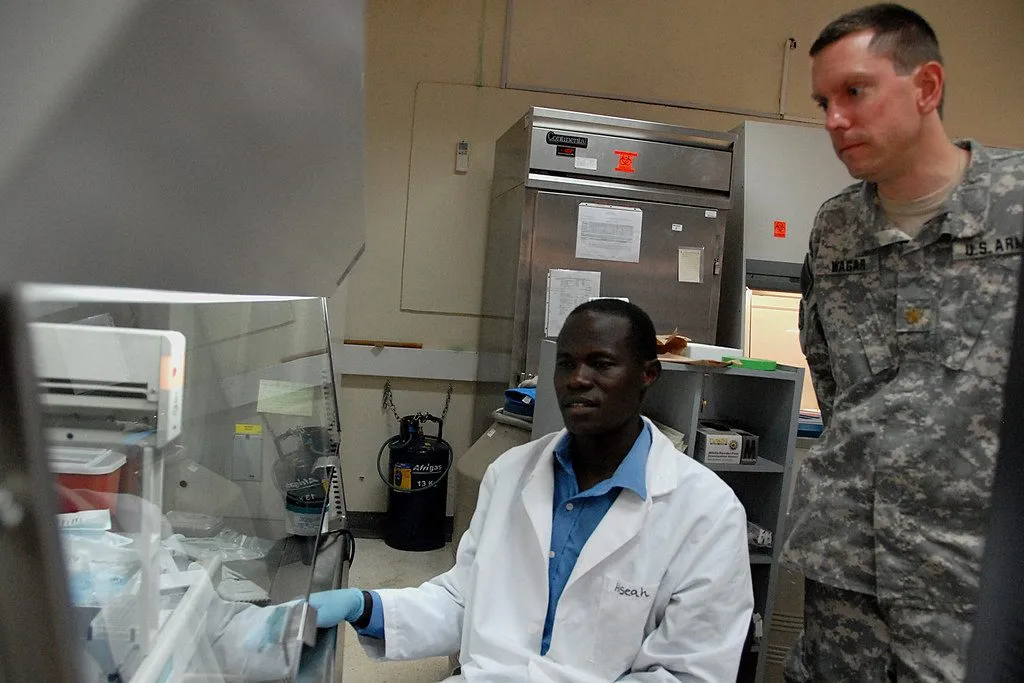
sleep study laboratory
Pictured sleep study laboratory · US Army Africa (via Openverse)
02/07 Life Sciences Psychology

The brain learns in two steps, and you can get the benefits of sleep without sleeping

Two studies published this week revealed something about learning that had not been visible before. The first used ultra-high-resolution diffusion MRI on living human brains and found that learning a new motor skill triggers a two-phase response 28.

First, cell bodies across all brain regions involved in the task expand briefly. This is a short-lived homeostatic response, the brain accommodating new input. Then, more slowly, the branching processes connecting neurons grow and stay grown in just the specific motor regions that handled the task. Permanent new wiring 28. The second study worked with mice and found something stranger: you can trigger the slow synchronized brain waves of deep non-REM sleep in a specific brain region while the animal stays fully awake and alert 103. That region gets the memory-consolidating benefits of sleep without the animal losing consciousness. The rest of the brain keeps watch while one area quietly rests 103.

What each field noticed (2)
PLOS Biology

Learning engages transient and sustained cellular mechanisms in the human brain

Researchers used a technique called Soma and Neurite Density Imaging, sensitive enough to distinguish cell bodies from cell processes inside a living human brain, and watched what happened during motor learning 28. The transient expansion of cell bodies across task-relevant regions suggests a short-lived homeostatic mechanism. The sustained growth of cell processes in specific motor areas looks like genuine structural plasticity. What is new is that both happen together, and now we can see them in a person, not just an animal model 28.

Read the story
PsyPost

Researchers induce the memory-boosting benefits of sleep in parts of the awake brain

A University of Wisconsin-Madison team led by Chiara Cirelli targeted specific brain regions in awake mice and artificially induced the slow-wave "on/off" cycling of non-REM sleep using electrical stimulation 103. The treated region showed reduced sleep pressure afterward, meaning it had satisfied its need for rest, and the mice showed better memory for material that region had been processing 103. "What we're essentially doing is forcing sleep in a local region of the brain," Cirelli said. "While that part is solidifying memories and restoring learning capacity, other parts stay aware and connected to the environment."

Read the story
Mount Fuji
Pictured Mount Fuji · Wikimedia Commons / Mount Fuji
03/07 Natural Sci. Technology

Japan shifted east when a seismic wave came back from Earth's core

The 2011 Tohoku earthquake, magnitude 9.0, is among the most closely studied natural disasters ever recorded. GPS stations across Japan captured everything.

But one signal in the data never made sense: sixteen minutes after the main shock, stations across the country registered a synchronized eastward shift of 5 to 6 millimeters 70. No aftershock had occurred. No known process could explain it. A team led by University of Chicago geophysicist Sunyoung Park traced the signal back to a type of seismic wave called an ScS wave, a shear wave that travels down to the boundary between Earth's mantle and liquid outer core, reflects, and climbs back up 70. When this particular wave returned to the surface, it triggered additional slip simultaneously along multiple major plate boundaries surrounding Japan 185. The resulting event stretched across roughly 1,800 miles, making it the broadest seismic event ever documented. It released energy equivalent to a magnitude 7.5 earthquake. Nobody had seen this before 185.

What each field noticed (2)
ScienceAlert

A Giant Seismic Wave Bounced Off Earth's Core And May Have Shifted Japan

ScienceAlert focused on the journey of the wave: 2,900 kilometers down through solid rock to the boundary with the liquid iron outer core, a bounce, and 2,900 kilometers back up to the surface 70. The wave was large enough that its surface return showed up not just on seismometers but on GPS receivers, meaning the physical movement of the ground was real and measurable 70. For years the signal looked like data processing noise. Park's team ruled out landslides, slow fault creep, and artifacts before concluding it was genuine. "Most of the time, we would see an offset like this when there's an actual earthquake happening," Park said. "But here there was no known aftershock, so we were quite curious" 70.

Read the story
Interesting Engineering

Scientists trace Japan's mysterious shift to quake waves rebounding from Earth's core

Interesting Engineering highlighted what the discovery means for engineering practice: the secondary event covered three thousand kilometers and involved the Pacific-Okhotsk boundary, the Philippine Sea-Eurasian boundary, and others at once 185. That is a scale of simultaneous fault response that existing early-warning systems are not built to detect or predict. The finding raises the question of whether large earthquakes in certain settings routinely generate these deep-reflected secondary events, and whether those events pose hazards in their own right 185.

Read the story
David Sinclair
Pictured David Sinclair · fboosman (via Openverse)
04/07 Technology Life Sciences

Gene therapy's landmark week: old cells made young, and a Huntington's cure moves closer

Two gene therapy milestones arrived in the same week. First: a patient received a single injection of ER-100, a gene therapy from Life Biosciences, into their eye, in what is described as the first time this anti-aging approach has entered a human being 190.

The therapy carries three Yamanaka transcription factors, genes whose activation can reprogram mature cells to behave like younger versions of themselves, delivered via a disabled virus directly into retinal neurons. The trial's initial focus is age-related eye conditions including glaucoma. The eye was deliberately chosen because it is relatively self-contained: if something goes wrong, effects stay localized. There are 18 planned participants 190. Second: the FDA reversed its previous opposition to a gene therapy for Huntington's disease developed by biotech company UniQure, clearing the path for the company to file for US approval 83. Huntington's is caused by a single faulty gene and is always fatal. There are currently no approved treatments that modify the disease itself 83.

What each field noticed (2)
New Atlas

Anti-aging gene therapy makes old cells young again in landmark human trial

New Atlas unpacked the cellular mechanics of what "reprogramming" actually means. The three genes in ER-100, OCT4, SOX2, and KLF4, are part of the Yamanaka factor family 190. A fourth factor, c-MYC, was deliberately omitted because it drives cancer. The calibration challenge is precise: give the genes enough activation to walk the cell back toward youth, but not so much that it forgets its identity as a retinal neuron. In animal experiments, the approach restored vision and reversed aging markers in the optic nerve. David Sinclair of Harvard Medical School, co-founder of Life Biosciences, called it "an important moment for the field of aging biology" 190.

Read the story
STAT

New hope in treating Huntington's disease

STAT featured Lauren Holder, a Huntington's disease advocate living with early-stage Huntington's herself 83. The FDA's reversal on UniQure's therapy was described in human terms: years of advocacy, years of regulatory obstacles, and a community that has been waiting for any meaningful option. Huntington's affects about 30,000 Americans and kills everyone it strikes. A gene therapy targeting the root cause would be the first treatment in the disease's history to do more than manage symptoms 83.

Read the story
man at laptop in home office
Pictured man at laptop in home office · Ed Yourdon (via Openverse)
05/07 Technology Psychology

A brain implant let a man with ALS read to his daughter for three years

Casey Harrell has ALS and can no longer speak without assistance. In July 2023 he received a brain-computer interface (BCI): a set of electrodes embedded in his motor cortex, connected to two docking ports on the top of his head, linked to software trained to decode his intended speech into phonemes and predict his words 187.

Nearly three years later, he uses the device to surf the web, maintain his work as a climate activist, reconnect with friends, and read to his daughter. A separate finding published this week in the Journal of the Acoustical Society of America found that AI voice clones are up to 20% more intelligible than the real human voices they mimic, specifically in noisy environments 102. For people who use computer-assisted speech because their own voice has been compromised by disease, that difference could matter more than it seems.

What each field noticed (2)
MIT Technology Review

Brain-computer interface trials are taking off

MIT Technology Review reported that the number of people with electrodes in their brains has more than doubled in the last two years 187. China became the first country to approve a BCI for medical use this year. The field has moved from proof-of-concept into iterative improvement: Harrell's device now includes a privacy mode and a "profanity filter" that lets him talk to his daughter without risking an accidental word 187. He described the device as "nothing short of revolutionary." The article is careful about what that means: BCIs currently require invasive surgery, carry risk of complications, and the signals they capture are best when the electrodes are closest to the target neurons 187.

Read the story
PsyPost

AI voice clones are easier to understand in noisy environments than real humans

A University College London researcher tested 80 participants with AI voice clones and the original human voices they were based on, playing them in increasingly noisy conditions 102. The clones were up to 20% more intelligible. The reason: natural human voices vary in speed, hoarseness, and accent in ways that AI smooths out. That smoothing is usually a flaw (it sounds slightly uncanny). In noise, it turns into an advantage. For someone with Parkinson's disease or recovering from throat cancer who relies on a synthesized voice to communicate, having that voice understood by the people around them is not a quality-of-life nicety. It is the whole point 102.

Read the story
pharmacist with medication
Pictured pharmacist with medication · e-MagineArt.com (via Openverse)
06/07 Psychology Social Sci.

Two familiar drugs are doing far more than their labels say

Two separate analyses this week found that widely available drugs are doing something significant beyond their original purpose. Researchers at Rutgers School of Public Health analyzed data from 7,500 adults and found that among the 821 who had taken GLP-1 drugs (the class that includes Ozempic and Wegovy), the usual link between high impulsivity and violent behavior was measurably weaker 110.

The drugs already quiet what users call "food noise," the background mental chatter about eating. The finding suggests they may quiet impulsive urges more broadly, including the kind that leads to aggression 110. Separately, economist Tyler Cowen summarized a now substantial body of evidence on the shingles vaccine and dementia: three new studies from the US, Australia, and Canada, using large numbers and credible designs, found roughly 20% reductions in dementia risk among people 50 and older who received the Shingrix vaccine 136. Women benefit more than men. The effect appears predominantly linked to Alzheimer's disease, and the mechanism may involve the varicella zoster virus (the same virus that causes chickenpox and shingles) playing a role in some forms of dementia 136.

What each field noticed (2)
PsyPost

Drugs like Ozempic might reduce violent crime risk by dampening impulsivity

The Rutgers team looked specifically at the link between impulsivity and violent behavior, a well-established risk factor for aggression, and whether GLP-1 drugs change it 110. They found that people who had taken the drugs showed a significantly weakened correlation between impulsive tendencies and violent acts. One proposed mechanism: the drugs affect the brain's dopamine system, which governs reward and motivation. Reducing dopamine-driven cravings for food may also reduce reactivity to other impulsive triggers 110. The study was observational and cannot prove causation, but the effect was large enough to be worth taking seriously.

Read the story
Marginal Revolution

The Shingles Vaccine Reduces Dementia

Cowen summarized the evidence clearly: three new large studies from three countries, each using natural experiments or population-level data, all finding the same result 136. The Shingrix vaccine already reduces the risk of shingles itself, a condition that can be genuinely dreadful, and appears to slow biological aging by methylation and RNA metrics. Now, for anyone 50 or older who has not been vaccinated, there is another reason. The effect is larger in women. The overall reduction is around 20%, predominantly in Alzheimer's-related dementia 136.

Read the story
Lionel Messi
Pictured Lionel Messi · Wikimedia Commons / Lionel Messi
07/07 Technology Social Sci.

AI predicted every World Cup match wrong. Humans did better.

USA Today asked Microsoft's Copilot to predict four World Cup matches this week. It predicted wins.

Every single one ended in a draw 174. Spain versus Cape Verde, predicted 3-0, finished 0-0. Copilot's reasoning was coherent: Spain has elite attackers, Cape Verde has a weak defense, therefore goals. What it could not model was Josimar "Vozinha" Dias, Cape Verde's goalkeeper, who saved everything that came at him and went viral for it. The AI was also wrong about Belgium-Egypt (predicted 2-1, finished 1-1), Uruguay-Saudi Arabia (predicted 2-1, finished 1-1), and Iran-New Zealand (predicted 1-0, finished 2-2) 174. A pre-publication study found that in controlled tests of AI models' ability to predict soccer outcomes, even the best model was right only 43% of the time, compared to 59% for humans 174.

What each field noticed (2)
Futurism

Sports Journalists Asked Microsoft's Copilot to Predict World Cup Matches, and the Results May Surprise You

Futurism was not gentle about the failure 174. The AI ingested media coverage and statistical rankings, which are real inputs, but the outputs were shaped by how those inputs were weighted in training. Spain is heavily covered, frequently described as a favorite. Copilot reproduced that hype as prediction. What the hype could not capture: one goalkeeper having the match of his life, which is a thing that happens in soccer all the time, is the whole beauty of it 174. A separate test found ChatGPT predicted the San Antonio Spurs would win the NBA Finals. The Knicks won 174.

Read the story
The Conversation

How Messi, Mbappe and Haaland use their brains as well as feet

A sport psychologist from Drexel University who studies how elite players handle chaos outlined what actually determines winners at this level 147. "Attentional fitness" is the ability to focus on precisely what matters in the moment under maximal pressure. "Controlled mind-wandering" is a real phenomenon in elite strikers: allowing the mind to briefly drift, then snap back, to manage cognitive load during a match 147. Top players do not freeze. They shift between attention states continuously and seamlessly. These are not things measurable in a statistical ranking, and they change within a single match depending on who slept well, who is dealing with an injury, who got into a player's head in the tunnel 147. AI models trained on historical statistics have no access to any of it.

Read the story
Fresh today · June 19, 2026

Good news you might have missed

No Outstanding Coal Mining Applications Left in the UK After Council Refusal in Carmarthenshire After a Welsh council rejected plans to dig for 85,000 tons of coal, protecting habitat for one of the UK's rarest butterflies, the UK now has zero outstanding proposals for new coal mines anywhere in the country. 209 Good News Network [209]
Drug, alcohol and suicide deaths fell in the US Drug deaths dropped 26%, alcohol deaths fell 4%, and suicides declined 3% in 2024, driven by expanded access to treatment and early intervention programs. The progress continued into 2025. 211 Positive News [211]
Sumatran Tiger Cubs Born in the UK Is Huge Win Three cubs, two females and one male, were born to first-time mother Tipah at Howletts Wild Animal Park in Canterbury, a meaningful addition for a subspecies with fewer than 400 individuals left in the wild. 207 Good News Network [207]
Just By Mowing a Lawn, Social Media Star Raises $685,000 for Bereaved Senior Who Fell Behind on Rent After Debbie lost her husband to cancer, fell three months behind on rent, and sometimes went without food, a social media creator mowed her lawn and started a GoFundMe that drew 22,000 donors and $685,000, all placed in a trust for her. 208 Good News Network [208]
A new law in Zambia makes free education much harder for future governments to take away Zambia wrote free public education from early childhood through secondary school into law, protecting a policy that brought more than 2.6 million children back to school when it was introduced in 2022. Zambia's Grade 12 pass rate hit 70% in 2025, its highest ever. 228 The Optimist Daily [228]
Spanish Court Hands Heura Big Win in David vs Goliath Case Brought by Meat Lobby A Barcelona appeals court cleared plant-based meat company Heura of nearly all unfair competition claims brought by six meat industry trade groups, ruling that Heura's messaging was grounded in scientific evidence and protected as free expression. Heura generates €17M in annual revenue; the six claimants represent more than €31B. 203 Green Queen [203]
Stunning Video of the Southern Lights Dancing Across the Earth Captured by a NASA Astronaut From inside SpaceX's Dragon capsule, astronaut Jessica Meir filmed the Aurora Australis snaking across Antarctica after a solar event, describing it as "ethereal and emotionally evocative." She posted a timelapse that went viral. 210 Good News Network [210]
The Shingles Vaccine Reduces Dementia Three large studies from the US, Australia, and Canada now independently confirm that the Shingrix vaccine reduces dementia risk by roughly 20% in people 50 and older, with the benefit strongest in women, and predominantly linked to Alzheimer's disease. 136 Marginal Revolution [136]
How student art is helping fund change Students Rebuild's Unique & United program drew 114,445 young people who created or helped make 90,720 pieces of art, unlocking the full $1 million cap in funding for organizations supporting refugees, displaced people, and communities in conflict. 212 Positive News [212]
Döhler Snaps Up British Cocoa-Free Chocolate Startup Nukoko German food giant Döhler acquired Nukoko, a UK startup that makes chocolate from fava beans using the same fermentation process as conventional cocoa, producing a product with 90% fewer emissions and 40% less sugar. Samples go on sale in August. 201 Green Queen [201]
Abandoned in a Delhi Slum, He Now Helps Girls Escape Child Marriage Devendra Kumar, abandoned at birth and pushed into child labour at eight, founded Ladli Foundation in 2010 after watching girls around him face the same cycle of exploitation he had survived. The organization has since reached 2.7 million lives. 221 The Better India [221]
What 3 New Crocodiles Are Telling Us About Similipal's Rivers Similipal Tiger Reserve's annual survey found 84 mugger crocodiles, up from 81 last year, breaking a two-year decline and signaling that the river ecosystems on which they depend are holding steady. 223 The Better India [223]
This 60-YO Farmer Ignored a Persistent Cough Until an AI Tool Detected His TB A portable AI screening kit detected tuberculosis in an asymptomatic 60-year-old farmer in rural Karnataka who had no idea he was sick, catching the disease at a stage when treatment could still make a full difference. 224 The Better India [224]
Brexit tore apart European science — now the research rifts are healing The UK rejoined Erasmus+ in April with a 2027 start date, its share of Horizon Europe funding has begun recovering since the 2024 reassociation, and political will on both sides to rebuild research ties is stronger than at any point since the 2016 vote. 18 Nature [18]

Everything we read today

Natural Sciences 75 articles
PLOS One
Life Sciences & Medicine 22 articles
Psychology & Behavioral Science 36 articles
Social Sciences 22 articles
Works in Progress RSS Feed
Technology & Innovation 45 articles
Plant-Based & Vegan 5 articles
Solutions & Good News 23 articles
Human Stories & Ideas 21 articles
The long view · not today's news, the story behind it

Today's discoveries didn't come from nowhere. Here's the older, ongoing story they belong to, a moment from this day in history, and a question to test what stuck.

The story so far

On this day in science

1865 Freedom reaches the last enslaved Americans Union General Gordon Granger arrived in Galveston, Texas, and announced that all enslaved people there were free, more than two years after the Emancipation Proclamation. The day became Juneteenth, now a national holiday marking the end of slavery in the United States. More from the Almanac →

Before you go: today's quiz

The daily quiz

What is a “preprint”?

Reveal the answer

A study shared before independent experts have reviewed it

A preprint is posted before peer review, the step where independent experts vet the work, so it deserves extra caution until that review has happened.

Read the explainer →

Get this every morning.

Liked today's? Wake up to tomorrow's, in one short letter.

The full letter, every morning, free for good.

Same free letter, plus the reason it stays that way: no ads, no investors, no agenda but the good news itself.

A single gift of any amount. No account, never a recurring charge.